Choosing 80 Plus Gold vs Titanium for Industrial Loads
For high-load industrial applications, Titanium usually beats Gold on energy cost and thermal load. Gold is acceptable for moderate loads or tight budgets, but check duty cycle and ambient temperature before finalizing the selection.
- Titanium generally delivers better efficiency under high loads than Gold in industrial power supplies.
- Ambient temperature and duty cycle shift the break-even point between efficiency tiers.
- Higher efficiency reduces internal heat, which can extend component life and improve reliability.
- Verify real-world power consumption data before choosing a tier for cost-sensitive systems.
- Match the efficiency class to the load profile to avoid overpaying for unused capacity.
What Load Profile Drives the Choice
Selecting an efficiency rating for an industrial power supply starts with the actual load curve. A constant 80 percent load behaves differently from a system that spikes to 95 percent during motor startup. The efficiency rating tells you how much of the input AC power becomes useful DC output. The rest becomes heat. In a rack with multiple units, that heat raises the local temperature and stresses capacitors, fans, and connectors.
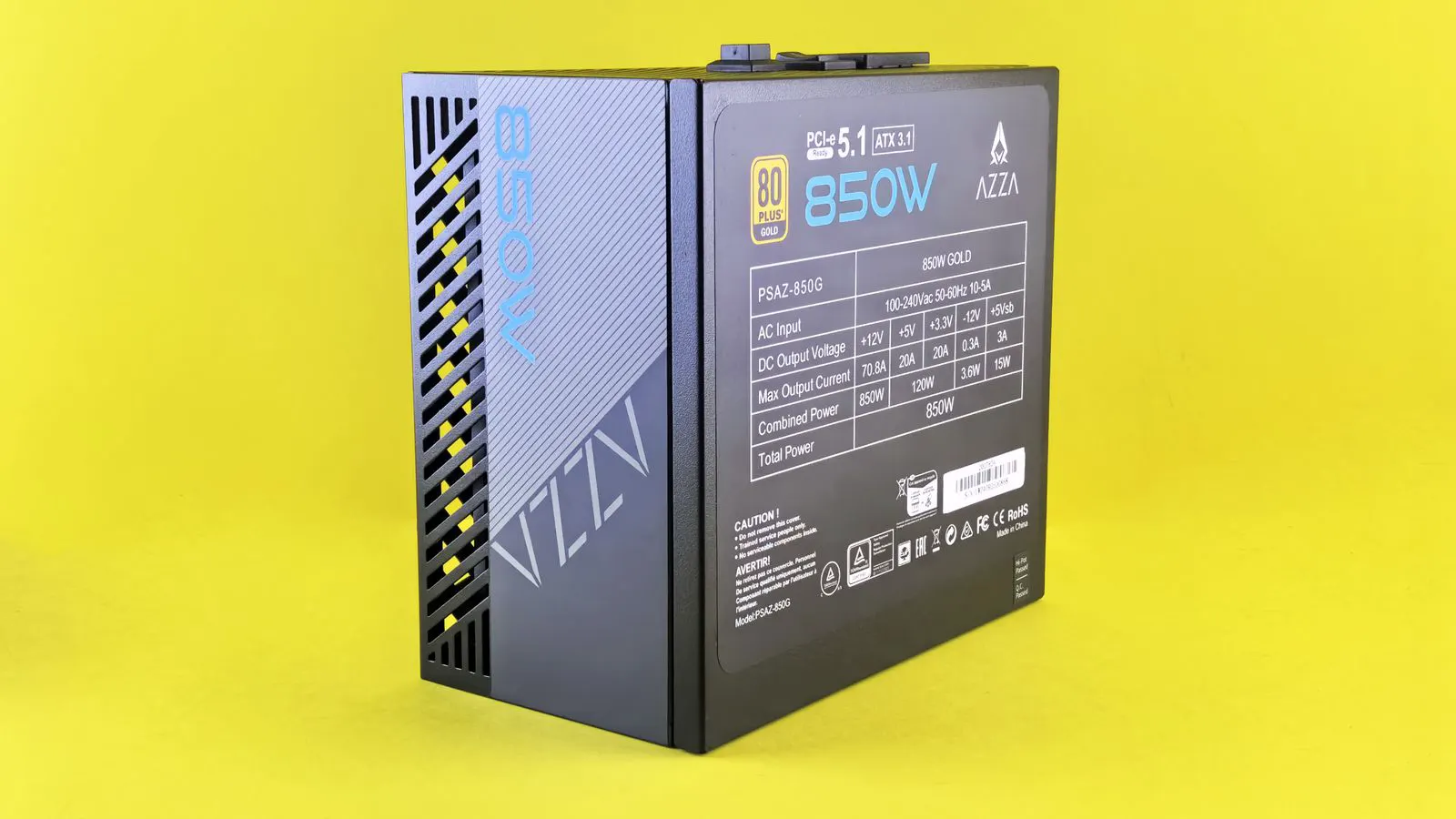
Gold and Titanium sit in different parts of the efficiency curve. Gold typically peaks around 85 to 90 percent under specific load conditions. Titanium aims higher, often above 90 percent across a broader load window. The exact numbers depend on the manufacturer and the specific model. For a steady industrial load, the difference between the two tiers may be small. For a variable load that spends time at high output, the gap widens.
If the system runs at low power most of the time, the savings from a higher tier shrink. An industrial controller that draws 150 watts at idle and 500 watts during active operation needs a different analysis than a motor controller that draws 1000 watts continuously. The key is to match the efficiency class to where the system actually operates. Consider a CNC machine tool. During cutting, the spindle and axis drives draw significant power. During tool change or idle, the draw drops sharply. If you select a unit based only on the peak load, you may pay for efficiency at 90 percent load while the unit spends 60 percent of its life at 30 percent load, where the difference between tiers is minimal.
How to Read the Efficiency Rating
The efficiency rating is a percentage. It tells you how much input power converts to output power. A unit rated at 92 percent at 50 percent load means that at that point, 8 percent of the input energy becomes waste heat. The challenge is that efficiency curves are not flat. They dip at very low and very high loads.
Most industrial PSUs provide a graph or a table showing efficiency versus load percentage. Check the point where your application spends the most time. If the load stays between 50 and 80 percent, look at the curve in that range. If the system runs near 95 percent or above, the high-end of the curve matters more.
Some manufacturers publish a weighted efficiency figure, often called a “weighted” or “full load” efficiency. This is a single number that averages performance across a defined range of loads. It is useful for quick comparisons, but it can hide problems. A unit might score well at 50 percent but drop sharply at 90 percent. For critical industrial loads, inspect the full curve. Pay attention to the “valley” in the curve. Many power supplies use a switching frequency that optimizes for mid-range loads. As you move toward the extremes, the control electronics may operate less efficiently, causing the curve to sag. If your application has a specific operational mode, such as a holding current for a hydraulic pump, verify the efficiency at that exact wattage, not just the rated maximum.
Energy Cost and Payback Period
Energy cost is the direct financial driver. The savings from a higher efficiency tier depend on three variables. The first is the price of electricity at your site. The second is the total load in watts. The third is the annual operating hours. A 1000 watt system running 24 hours a day at 8 percent efficiency difference represents a meaningful annual cost. A 50 watt system running 8 hours a day may never recover the premium.
Calculate the annual energy difference. Take the wattage, multiply by the operating hours, multiply by the price per kilowatt hour, and multiply by the efficiency gap. If the annual savings do not cover the price difference between the Gold and Titanium units within your target payback period, the higher tier may not justify the cost.
In many industrial environments, the payback period is short. A plant running 24/7 with a 1500 watt load may see a Titanium unit recover its premium within a year. A lab or office equipment rack that runs intermittently may take several years to justify the upgrade. Do not guess. Use the actual load data and the actual electricity rate.
Consider the impact of demand charges. Some industrial sites pay a fee based on the peak kW drawn from the grid, not just the total kWh consumed. If the power supply is part of a facility-wide power management system, reducing the peak draw by using a more efficient unit or a lower tier unit that handles the load with less margin might affect these charges. However, for a single power supply, the kWh calculation is usually the primary metric. Always check if your utility rate includes a demand charge. If it does, the calculation becomes more complex. You need to determine if the power supply contributes to the facility peak during specific time windows.
Thermal Impact and Reliability
Efficiency and heat are directly linked. Every watt lost as heat must be removed by fans, heatsinks, or the ambient environment. A higher efficiency unit produces less waste heat, which reduces the thermal load on the enclosure and the power supply itself. This matters because components age faster at higher temperatures.
Capacitors, in particular, are sensitive to heat. The failure rate of many electronic components roughly doubles for every ten degree Celsius rise in temperature. This is a general engineering principle, not a specific guarantee for one part. The point is that a cooler system is often a longer lasting system. In a dense rack, a high-efficiency unit can lower the temperature of neighboring components, reducing the risk of thermal shutdowns.
Consider the ambient temperature. If the equipment runs in a hot environment, the efficiency gap becomes more relevant. A unit that runs cooler can maintain its output at higher ambient temperatures without derating. If the system is already at the edge of its thermal limit, a small efficiency gain can be the difference between stable operation and intermittent failures.
Check the thermal derating curve in the datasheet. Many power supplies reduce their maximum output power when the ambient temperature exceeds a certain threshold, such as 40 degrees Celsius or 50 degrees Celsius. If your enclosure reaches 55 degrees Celsius, a standard unit might need to derate its output by 20 percent. A unit with higher efficiency might maintain its full output up to a higher temperature because it generates less internal heat. This allows you to keep the same power output without resizing the enclosure or adding additional cooling.
Criteria for Selection
Use the table below to compare efficiency tiers against your specific application requirements. This list covers the main factors that affect the final decision.
| Criterion | What to look for | Why it matters |
|---|---|---|
| Load Profile | Load percentage over the operating cycle | Efficiency varies with load. Match the tier to the dominant load point. |
| Ambient Temperature | Maximum operating temperature in the enclosure | Higher heat output stresses components. Higher efficiency reduces this stress. |
| Duty Cycle | Hours of operation per day or week | Long run times increase the value of small efficiency gains. |
| Energy Rate | Cost per kilowatt hour at your site | Higher energy costs shorten the payback period for premium units. |
| Space and Airflow | Rack density and ventilation capacity | Less heat helps maintain airflow and component temperatures. |
| Reliability Target | Mean Time Between Failures or warranty needs | Lower thermal stress can extend component life and reduce maintenance. |
Common Mistakes in Tier Selection
Buyers often pick the highest efficiency tier without checking the load profile. This leads to overpayment for a unit that spends most of its time at low efficiency anyway. A Titanium unit running at 10 percent load may be less efficient than a Gold unit at the same point. The curve shape is as important as the peak number.
Another mistake is ignoring the environment. A high-efficiency unit in a poorly ventilated rack still generates heat. It generates less heat, but the enclosure may be the bottleneck. If the airflow is restricted, the temperature rise will still occur. The efficiency gain helps, but it does not replace proper thermal design.
Some buyers also focus only on the sticker price and ignore the total cost of ownership. A cheaper Gold unit may require more frequent fan replacement or have a shorter capacitor life due to higher operating temperatures. The initial savings may vanish within a few years of maintenance and downtime.
Consider the noise profile as well. Higher efficiency units often use larger cooling components or more complex thermal paths to manage the heat they do produce. In some cases, a less efficient unit might run at a lower fan speed if the ambient temperature is moderate, resulting in lower noise. If your application is in a sensitive acoustic environment, such as a recording studio or a medical imaging room, noise levels should be part of the selection criteria, not just efficiency.
Decision Checklist
Use this checklist to finalize the selection for your industrial load.
- Identify the average and peak load in watts for the application.
- Determine the operating hours per year.
- Check the ambient temperature inside the enclosure or rack.
- Compare the efficiency curves of candidate units at your specific load points.
- Calculate the annual energy savings difference between Gold and Titanium.
- Assess the thermal design of the enclosure.
- Review the warranty and expected component life at the target temperature.
- Select the tier that meets the reliability and cost targets without over-specifying.
Frequently asked questions
Is Titanium always better than Gold for industrial loads?
Not always. Titanium usually performs better at high loads, but the advantage depends on the specific load profile and the efficiency curve of the chosen units.
How do I find the exact efficiency curve for a PSU?
Check the manufacturer's data sheet or technical manual. Look for a graph or table showing efficiency at different load percentages and output voltages.
Can I mix Gold and Titanium units in the same rack?
Yes, but it can complicate thermal management. Different units produce different amounts of heat, which may affect airflow and component temperatures.
What is the typical efficiency difference between Gold and Titanium?
The difference varies by model and load. Titanium units often achieve higher peak efficiency and maintain higher efficiency across a wider load range.
Does higher efficiency always mean longer life?
Generally, yes, because less waste heat reduces stress on components. However, other factors like input quality and mechanical shock also affect lifespan.