Comparison: Linear vs Switching DC-DC Converters in Noise Sensitive Systems
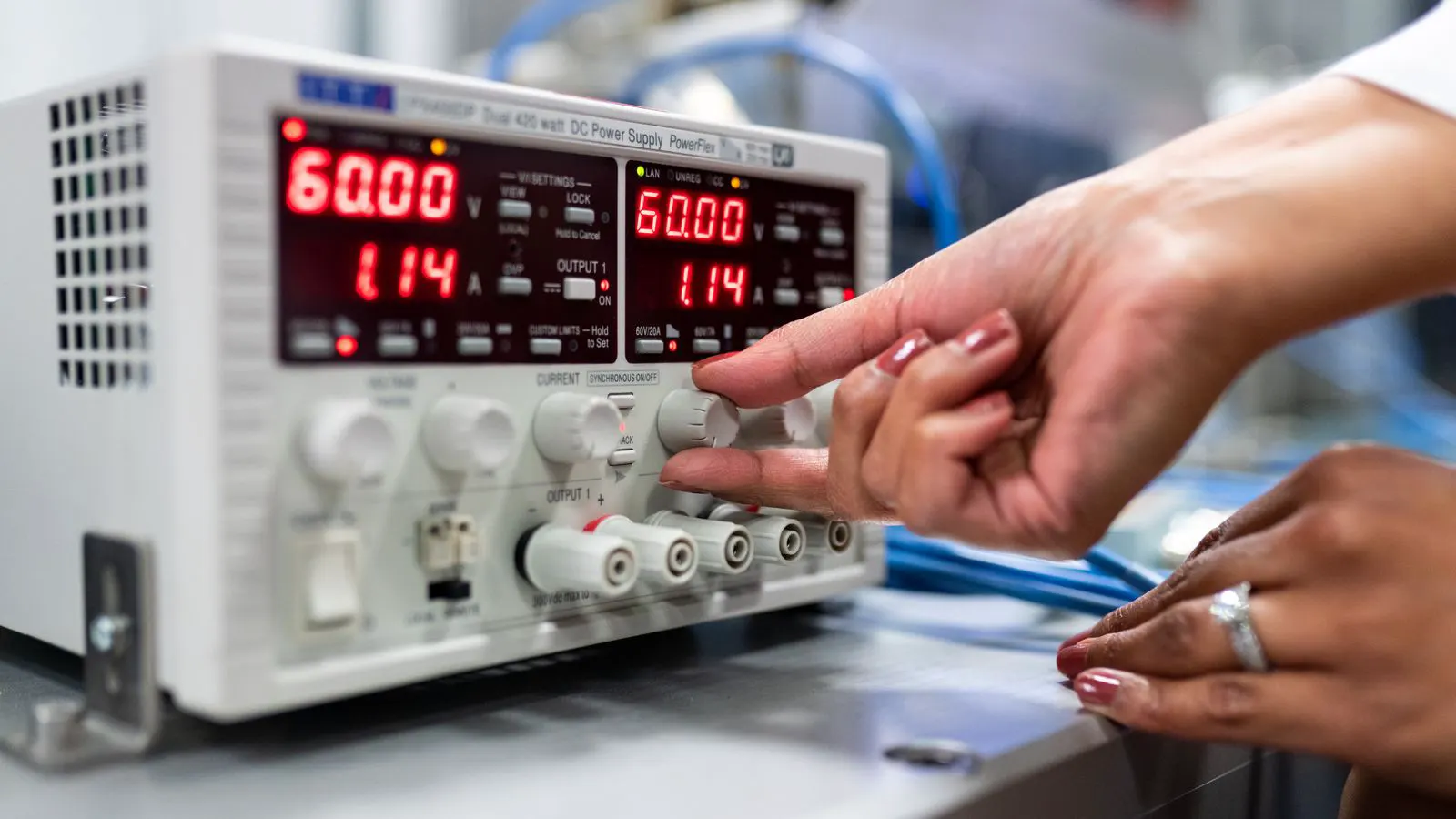
Linear DC-DC converters offer lower output noise but high heat. Switching DC-DC converters provide high efficiency but require filtering. Choose based on your noise budget, power density, and thermal constraints.
- Linear converters produce minimal high-frequency noise but reject heat efficiently.
- Switching converters are efficient but emit electromagnetic interference that requires filtering.
- Thermal limits often force a choice between these two technologies.
- Isolation requirements change the trade-off balance significantly.
- Noise sensitive systems need a detailed budget before selection.
The Core Trade-Off: Noise Versus Heat
The decision between linear and switching DC-DC converters comes down to how you manage heat and how much noise your downstream electronics can tolerate. A linear converter drops voltage by burning off excess energy as heat. This method produces very clean output power because it operates at line frequency. A switching converter chops voltage at high frequencies to step it down efficiently. This method saves energy but creates ripple and electromagnetic interference.
For sensitive electronics, this trade-off is not abstract. A linear converter might deliver a 12 volt output from a 24 volt input. The excess 12 volts dissipate as heat in the pass transistor. The output noise floor is low, often limited only by the input source. A switching converter might deliver the same 12 volts from a 24 volt input with higher efficiency. However, the switching action creates noise above 100 kHz. If the sensitive instrument is an oscilloscope or a medical device, that noise can distort readings or trigger alarms.
Output Noise and Ripple Characteristics
Linear converters do not generate switching noise. The output ripple comes from the input ripple and the regulation loop. The filter capacitors in a linear design are usually small because the regulator handles the bulk of the work. The noise spectrum is flat and low amplitude. For analog front ends in audio or measurement instruments, this is the ideal profile.
Switching converters operate at frequencies ranging from tens of kilohertz to several hundred kilohertz. The output ripple consists of a sawtooth wave superimposed on the average voltage. The amplitude of this ripple depends on the inductor and capacitor values in the output filter. The switching frequency also determines the frequency of the ripple. Higher switching frequencies reduce ripple amplitude but increase switching losses and EMI.
EMI is the other major concern with switching DC-DC converters. The fast current transients in the switch and the magnetic field in the inductor create radiated and conducted emissions. These emissions can couple into nearby traces or cables. In a dense electronic assembly, the EMI from one converter can degrade the performance of another. Linear converters do not have this problem because they do not switch current.
Efficiency and Power Dissipation
Efficiency is where switching converters win. A linear converter with a 24 volt input and a 12 volt output at full load has a theoretical maximum efficiency of 50 percent. In practice, it will be lower due to voltage drop across the pass element and quiescent current. A switching converter can achieve efficiencies above 90 percent under similar conditions. This difference matters in battery powered systems or dense enclosures where heat removal is limited.
Power dissipation directly affects thermal design. A linear converter running at 50 percent efficiency will generate significant heat. For a 10 watt output, the linear converter may dissipate another 10 watts as heat. This heat must be removed through a heatsink or convection. A switching converter running at 90 percent efficiency will dissipate less than 1 watt of heat. It can often be mounted on a small copper plane or even the PCB without a heatsink.
Thermal limits are often the deciding factor. If your system has a small form factor, a switching converter is almost always the better choice. If your system has plenty of space for a heatsink and the power level is low, a linear converter may be simpler to implement.
Comparison Table
| Option | Best for | Limitations |
|---|---|---|
| Linear DC-DC Converter | Low power, low noise, simple thermal | Low efficiency, heat generation, heavy |
| Switching DC-DC Converter | High efficiency, high power, dense | EMI, ripple, complex filtering |
| Isolated Linear Converter | High noise immunity, small power | Low efficiency, heavy, limited power |
| Isolated Switching Converter | High power, isolated, efficient | EMI, ripple, complex layout |
When to Pick a Linear Converter
Pick a linear DC-DC converter when noise is the dominant constraint. This is common in laboratory instruments, medical imaging, and high-end audio. The output noise of a linear converter is low enough that it does not interfere with sensitive analog circuits. The regulation is also stable, which is beneficial for precision measurement.
Linear converters are also simpler to design and debug. There are no high-frequency switching nodes to layout carefully. The power stage is a single pass element and a regulation loop. If the input voltage is close to the output voltage, the heat dissipation is manageable. For example, a 5 volt to 3.3 volt linear regulator runs cooler than a 5 volt to 3.3 volt switching regulator because the voltage drop is small.
However, linear converters are not suitable for high power applications. The heat generated scales with the power delivered. At 50 watts or more, the heatsink size becomes impractical. The weight of the copper and aluminum used for heat removal can also be a problem in portable or aerospace applications.
When to Pick a Switching Converter
Pick a switching DC-DC converter when efficiency and power density are the dominant constraints. This is the standard for industrial controls, battery powered devices, and high power systems. The ability to operate at high efficiency allows the system to run cooler. The small size of the switching components allows for compact designs.
Switching converters are also better suited for wide input ranges. A linear converter needs the input voltage to be higher than the output voltage by a few volts. A switching converter can operate over a wider input range and still deliver the same output. This is useful for systems that run on different power sources or where the input voltage varies significantly.
The challenge with switching converters is EMI. You must design the layout to minimize loop areas and filter the output to reduce ripple. The inductor and capacitor values must be selected to match the switching frequency. The PCB layout must keep high current paths short and away from sensitive signals. This adds complexity and cost to the design.
Noise Mitigation Techniques
If you must use a switching converter in a noise sensitive system, you can mitigate the noise. The most effective method is to increase the output filter. Adding a ferrite core or a LC filter after the converter can reduce the ripple amplitude. The filter should be tuned to the switching frequency.
EMI filtering is also critical. You must install common mode chokes on the input and output lines. These chokes suppress the differential and common mode noise generated by the switching action. The layout of the PCB is equally important. Keep the high frequency loops small. Use a ground plane to provide a low impedance return path.
For linear converters, noise mitigation is simpler. The main source of noise is the input ripple. You can filter the input with a capacitor or a low pass filter. The output noise is already low, so additional filtering is rarely needed. The thermal design is the main concern. Ensure the heatsink is large enough to dissipate the heat at maximum load.
Isolation and Safety
Isolation is another factor that influences the choice. Many industrial systems require galvanic isolation between the input and output. This protects the user and the equipment from ground loops and transients. Both linear and switching converters are available with isolation.
Isolated switching converters are the most common for high power isolation. They use a transformer to transfer energy between primary and secondary. The transformer provides the isolation and the step-down ratio. The efficiency is high, but the EMI is higher than in non-isolated designs. The transformer also adds weight and size.
Isolated linear converters are less common for high power. They use a transformer on the primary side and a linear regulator on the secondary side. The transformer steps the AC input to a low voltage AC, which is rectified and then regulated. This design has lower efficiency but lower EMI on the secondary side. It is suitable for low power applications where isolation is required.
Final Selection Criteria
The final choice depends on your specific requirements. Start with the noise budget. If your system cannot tolerate more than 1 millivolt of ripple at 1 MHz, a linear converter is the safe choice. If your system can tolerate 10 millivolts of ripple, a switching converter with a good filter may work.
Next, consider the power level. Below 5 watts, a linear converter is often simpler and cheaper. Above 20 watts, a switching converter is usually better for efficiency and size. Between 5 and 20 watts, it depends on the thermal constraints. If you have room for a heatsink, a linear converter may be acceptable.
Finally, look at the input voltage. If the input is 5 volts and the output is 3.3 volts, a linear converter runs cool. If the input is 48 volts and the output is 12 volts, a linear converter will burn off a lot of heat. A switching converter is the only practical option in this case.
By understanding these trade-offs, you can select the right DC-DC converter for your system. Do not default to one technology. Evaluate the noise, thermal, and efficiency requirements for your specific application.
Frequently asked questions
What is the main difference between linear and switching DC-DC converters in terms of noise?
Linear converters produce low output noise because they do not switch current. Switching converters produce ripple and EMI due to high frequency switching.
When is a linear DC-DC converter a better choice than a switching one?
A linear converter is better for low power applications with strict noise requirements and adequate thermal space.
How does EMI affect noise sensitive systems?
EMI from switching converters can couple into nearby circuits and degrade performance. It requires filtering and good layout to control.
Can a switching converter be used in a medical device?
Yes, but it requires careful EMI filtering and layout. Many medical devices use isolated switching converters to meet safety and noise standards.
What is the impact of input voltage on efficiency?
Higher input voltage relative to output voltage reduces linear converter efficiency. Switching converters maintain high efficiency over a wider input range.