Cost Impact of Low Efficiency on Industrial Power Systems
Low efficiency converts electrical energy into heat, raising utility bills and cooling loads. This guide shows how to calculate operating costs and compare total cost of ownership to estimate savings from upgrading industrial power supplies.
- Efficiency losses appear as heat and direct energy waste, increasing both utility bills and cooling requirements.
- Total cost of ownership includes purchase price, electricity, cooling, and maintenance, not just the initial invoice.
- Higher efficiency units reduce long-run costs even when their upfront price is higher.
- A simple energy cost calculation using load, duty cycle, and efficiency percentage provides a reliable estimate of savings.
- Clear RFQs specifying efficiency targets and load profiles help vendors provide accurate quotes for comparison.
What Does Low Efficiency Cost in an Industrial Setting
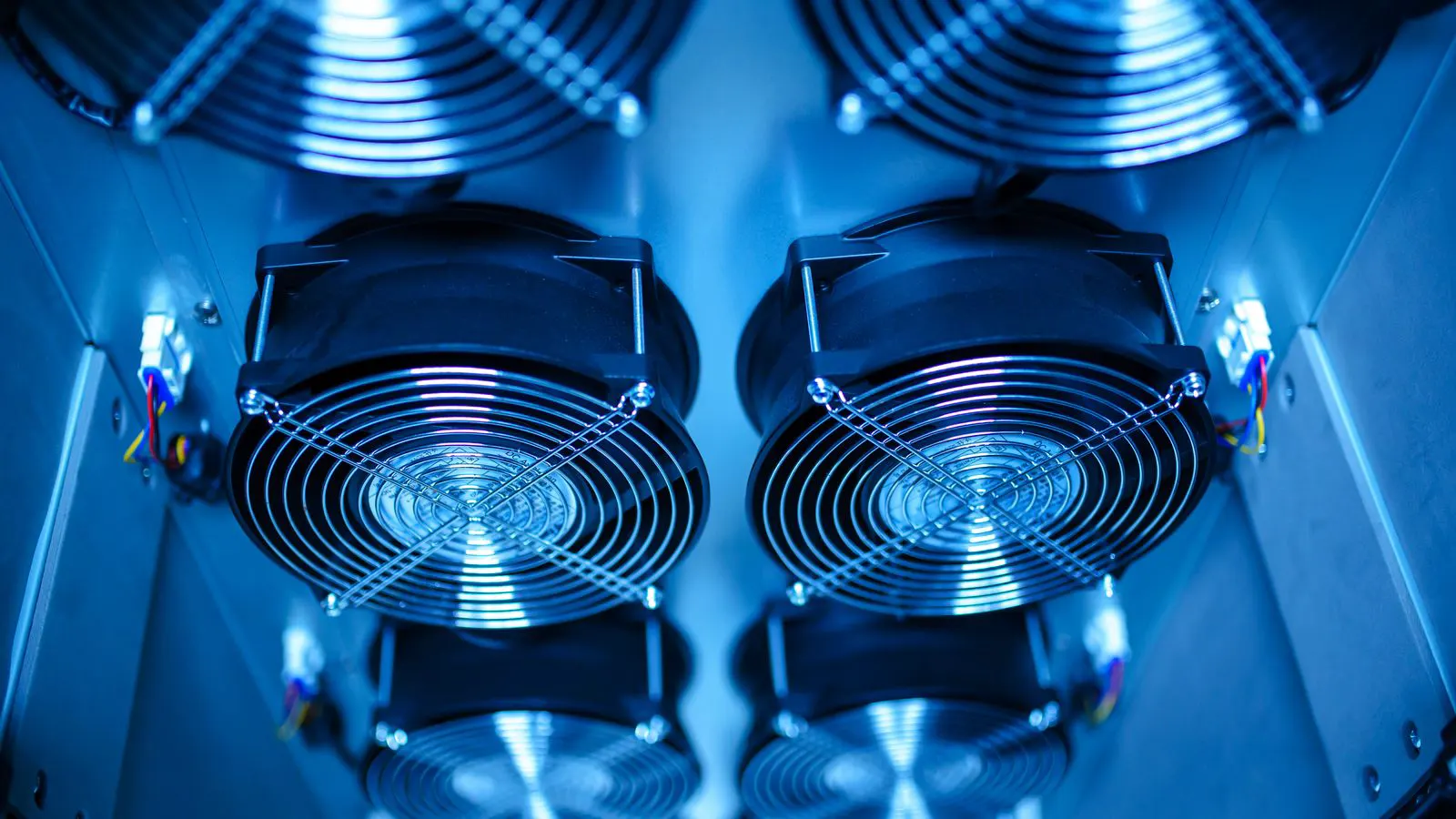
A power supply converts electrical energy from the grid into usable DC power. The portion that does not become useful output becomes heat. When efficiency drops, that heat grows. In an industrial facility, that heat does not disappear. It raises the temperature inside the enclosure, the rack, and the room. The facility must then run cooling harder to keep the equipment in its safe operating range.
This creates a double cost. You pay more for the electricity the supply wastes. You also pay more for the cooling that removes the waste heat. For a facility running 24 hours a day, these costs compound over months and years. A supply that runs at 80 percent efficiency wastes 20 percent of its input power. A unit running at 95 percent efficiency wastes only 5 percent. The difference is not a small percentage in a spreadsheet. It is a continuous drain on the facility budget.
Consider a 5 kW load running 8,760 hours a year at a standard efficiency of 80 percent. The input power is 6.25 kW. The energy consumed is about 54,750 kWh per year. If the same 5 kW load runs through a 95 percent efficient unit, input power drops to 5.26 kW and annual energy drops to about 46,100 kWh. That is a reduction of roughly 8,650 kWh per year from a single power supply. Multiply that across a rack or a plant and the energy bill difference becomes substantial. The numbers above use general assumptions for illustration. Your actual figures depend on your local rate, load profile, and efficiency curve.
How to Calculate the Operating Cost of a Power Supply
The operating cost of a power supply is not just the electricity bill. It includes the cost of the cooling needed to manage the waste heat. A practical approach is to calculate the annual energy cost first, then add an estimate for the thermal management burden.
Start with the formula for input power. Input power equals load power divided by efficiency. If a power supply delivers 3 kW of DC power and operates at 85 percent efficiency, the input power is 3.53 kW. If it operates at 92 percent efficiency, the input is 3.26 kW. The difference is 0.27 kW of wasted power. Over 8,000 hours, that is 2,160 kWh of extra energy. At a typical industrial rate, that translates into a recurring monthly expense.
Cooling adds another layer. The heat that leaves the power supply must be removed by fans, air conditioning, or liquid cooling. If the facility uses air conditioning, the compressor consumes power to remove that heat. In simple terms, for every watt of waste heat you generate, the cooling system needs to work harder. In a tightly packed rack, poor airflow can also cause the power supply to derate its output or fail earlier because its internal components exceed safe temperatures. This links efficiency directly to reliability and maintenance.
A useful rule of thumb is to treat the waste heat as a direct load on the cooling system. If a rack contains multiple power supplies and the total waste heat exceeds what the ventilation can handle, the facility may need to add fans, improve ducting, or upgrade the HVAC. Those are real costs, often overlooked in the initial purchase decision.
Total Cost of Ownership: What to Include
When comparing power supplies, the purchase price is only one line item. Total cost of ownership includes the cost of electricity over the product life, the cost of cooling, the cost of maintenance, and the cost of downtime. A higher efficiency unit may cost more on the invoice, but it can reduce the other line items significantly.
The purchase price is the upfront capital cost. It varies based on output power, protection features, redundancy options, and efficiency rating. A unit rated for higher efficiency often uses more advanced power electronics and better thermal design. That drives the initial price up. However, the energy savings over a five or ten year life can offset that premium.
The energy cost is the largest recurring expense for most facilities. It depends on the load power, the duty cycle, the efficiency at that load, and the local electricity rate. An industrial facility running 18 hours a day with variable loads will see a different energy cost than one running 24 hours at a fixed load. The efficiency curve matters here. A power supply may be 90 percent efficient at 50 percent load but only 85 percent at 10 percent load. Matching the supply to the actual load profile is part of the cost analysis.
Maintenance costs include filter replacement, fan replacement, and inspection. Higher quality power supplies often last longer and require less frequent service. But the main driver of maintenance is thermal stress. A unit that runs hotter than designed will see its internal capacitors and solder joints degrade faster. This increases the chance of failure and the cost of replacement.
Downtime is the hardest cost to quantify but often the most damaging. If a power supply fails, the production line stops. The cost of a failed shift or a lost batch can far exceed the cost of the power supply itself. Higher efficiency units that run cooler are generally more reliable under sustained load.
How to Compare Quotes and Efficiency Claims Fairly
Vendors provide efficiency ratings in different ways. Some quote a single number at a specific load. Others provide an efficiency curve across multiple load points. A fair comparison requires you to ask for the same data from every vendor.
When writing an RFQ, specify the load profile. State the maximum load, the average load, and the minimum load. Include the duty cycle. For example, “5 kW DC output, average load 60 percent for 18 hours daily, minimum load 10 percent.” Request the efficiency at 10, 25, 50, 75, and 100 percent load. Request the power factor at the same points. Ask for the maximum ambient temperature the unit supports without derating.
When you receive quotes, compare them using a standardized table. List the purchase price, the efficiency at your average load, the estimated annual energy cost, the estimated cooling impact, and the expected lifespan. This makes the comparison objective. A unit that costs 15 percent more but has 5 percent higher efficiency at your average load may have a lower total cost of ownership over five years.
Be careful with marketing claims. A unit may advertise a high peak efficiency at a specific load. If your facility never operates at that load, the number is not useful. Always check the efficiency at the load you actually run. Also check the efficiency at low load. Many facilities run at partial load for much of the time. If the efficiency collapses at low load, the savings from the high peak number disappear.
A table helps organize this data. The following example shows how to structure a comparison for three hypothetical bids. The numbers are illustrative and do not represent any specific product or vendor.
| Cost Driver | Unit A | Unit B | Unit C |
|---|---|---|---|
| Purchase Price | $2,000 | $2,400 | $2,800 |
| Efficiency at 60% Load | 88% | 92% | 94% |
| Efficiency at 10% Load | 80% | 85% | 90% |
| Estimated Annual Energy | $4,200 | $3,900 | $3,700 |
| Expected Service Interval | 2 years | 3 years | 4 years |
| Estimated Total Cost (5 Years) | $24,000 | $22,500 | $23,000 |
In this example, Unit A has the lowest purchase price but the highest energy cost and shortest service interval. Unit B offers a balance. Unit C has the highest purchase price but the lowest energy cost and longest service interval. The total cost over five years shows that the cheapest bid is not always the best value.
How Lead Time and Delivery Affect the Financial Picture
Lead time is often treated as a scheduling issue, but it has a direct cost impact. If a facility needs a replacement power supply and the standard lead time is eight weeks, the facility may need to run a temporary unit, pay overtime to install it, or accept reduced production. Each of these actions has a cost.
When you request a quote, ask for the lead time. Ask if the lead time includes the manufacturing time, the testing time, and the shipping time. Ask if the lead time changes based on the configuration. A standard unit may ship in two weeks. A custom unit with a specific input range or output configuration may take three months.
If you are planning a facility upgrade, build the lead time into the project schedule. Order the power supplies early enough to avoid delays. If you are replacing a failed unit, check if the vendor has stock on hand. A high-efficiency unit that is not in stock will not help you today, no matter how much it saves over the next decade.
Some vendors offer expedited shipping or factory pickup options. These cost extra but can reduce downtime. Factor that cost into your decision. Sometimes the cost of a premium delivery is less than the cost of a production halt.
What to Put in Your RFQ to Get Accurate Quotes
A clear RFQ reduces the number of back-and-forth questions and helps vendors provide accurate pricing. Include the following details.
- Output power and voltage range. State the exact DC output required, including any tolerance or ripple specifications.
- Input specifications. List the AC input voltage range, frequency, and power factor requirements.
- Load profile. Describe the average load, maximum load, minimum load, and duty cycle.
- Efficiency requirements. Specify the minimum efficiency at your average load and at low load.
- Thermal environment. State the maximum ambient temperature and whether the unit will be in a rack with limited airflow.
- Protection features. List required protections such as overvoltage, undervoltage, short circuit, and overtemperature.
- Physical constraints. Provide the form factor, mounting requirements, and any clearance needs.
- Quantity and timeline. State how many units you need and when you need them delivered.
- Compliance and standards. List any required certifications or industry standards.
- Budget range. Providing a budget range helps vendors focus their proposals on options you can afford.
When you receive the quotes, ask vendors to confirm their assumptions. If you specified a 60 percent average load, ask them to confirm the efficiency at 60 percent. If you specified a maximum ambient of 40 degrees Celsius, ask them to confirm the derating curve if it exceeds that. This alignment prevents misunderstandings later.
When the Upgrade Is Worth It
An upgrade to a higher efficiency power supply is worth it when the energy savings over the life of the unit exceed the price difference. For a facility running 24 hours a day, the payback period is often shorter than for a facility running in shifts. The longer the duty cycle, the more the energy savings add up.
The upgrade is also worth it when the existing units are approaching the end of their service life. Replacing a failed unit with a high-efficiency model gives you a new baseline. You do not have to replace the entire facility at once. A phased approach, where you replace units as they fail or as you schedule maintenance, spreads the cost and captures the savings incrementally.
Consider the thermal environment as well. If your facility is already at its cooling limit, adding a less efficient unit may force you to invest in cooling upgrades. A high-efficiency unit reduces the heat load and may allow you to defer or avoid those cooling investments. This is a hidden savings that is easy to miss but significant in tight spaces.
Finally, look at the long-term view. Energy prices fluctuate. A unit that saves a small amount of energy today may save a much larger amount in a few years if rates increase. Higher efficiency gives you a buffer against rising energy costs. It also reduces the carbon footprint of the facility, which matters for sustainability goals and corporate reporting.
The financial case for higher efficiency is not complicated. It is a matter of doing the math correctly and looking at the whole system, not just the purchase price. When you include energy, cooling, maintenance, and downtime, the picture becomes clear. A high-efficiency power supply is not just a spec sheet number. It is a cost control tool.
Frequently asked questions
How do I know if my current power supply is inefficient?
Check the nameplate for an efficiency rating. If it is older than five or six years, it likely runs at a lower efficiency than modern units. You can also measure the input power with a power analyzer and compare it to the output power to calculate the actual efficiency.
What is the typical efficiency difference between a standard industrial power supply and a high-efficiency one?
Standard industrial units often operate in the 80 to 85 percent range at full load. High-efficiency units can reach 92 to 96 percent at their rated load. The exact numbers depend on the manufacturer and the load profile.
How long does it usually take to recover the cost of a higher efficiency power supply?
For facilities running 24 hours a day with a large load, the payback period can be a few years. For facilities running in shifts or at low loads, it can take longer. The exact time depends on the energy rate, the load profile, and the price difference.
Do I need to replace all my power supplies at once?
No. A phased approach is often more practical. Replace units as they reach the end of their service life or during scheduled maintenance. This spreads the cost and allows you to capture savings gradually.
How does efficiency affect the power factor of a power supply?
Power factor and efficiency are related but separate metrics. A power supply can have a high efficiency but a low power factor, or vice versa. A good power supply has both high efficiency and a high power factor. Check both when comparing quotes.